

A slab leak in Lawrenceville usually shows up as warm spots on the floor, unexplained water bills, or water that seems to be coming from nowhere. These leaks happen under your home’s concrete foundation, which makes them harder to spot—and more important to address quickly. In many cases, the issue isn’t just the leak itself, but aging pipes, shifting soil, or outdated materials like polybutylene that have started to fail. The right approach starts with confirming exactly where the leak is and why it happened, so the repair actually holds.
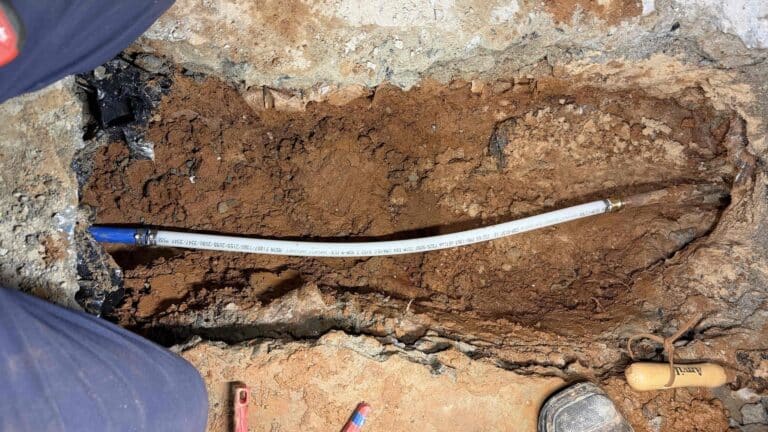
Slab leaks are one of those problems that can feel unclear at first. You might notice something small—a warm spot on the floor, a slightly higher water bill—and it’s not immediately obvious what’s causing it. Underneath your home, though, something is actively leaking, and over time that can start to affect your foundation, flooring, and overall structure.
In Lawrenceville, we see this happen a lot in homes with aging pipes or older materials like polybutylene. The key is figuring out what’s actually going on early, before it turns into a larger repair.
How Slab Leaks Show Up in Lawrenceville Homes
Most slab leaks don’t start with obvious water. They tend to show up in small, confusing ways at first.
You might notice:
- A water bill that’s higher than usual with no clear reason
- Warm or damp spots on your floor
- The sound of running water when nothing is on
- Cracks forming in flooring or baseboards
- Low water pressure throughout the home
Lawrenceville homes—especially those built in the late 80s through early 2000s—often used materials that are now reaching the end of their lifespan. That’s part of why we’re seeing more of these leaks now.
Polybutylene Pipes and Why They Matter
One of the biggest factors we still run into in Lawrenceville is polybutylene piping.
Polybutylene was commonly installed in homes for a period of time because it was inexpensive and easy to work with. The problem is, it doesn’t hold up long-term. It breaks down from the inside out, often without obvious warning until a leak develops—sometimes under the slab.
If your home has polybutylene, a slab leak isn’t always a one-time issue. It can be a sign the system as a whole is starting to fail.
What Actually Causes a Slab Leak
There’s usually more going on than just “a pipe broke.”
We commonly find:
- Pipe corrosion from water chemistry over time
- Shifting soil putting pressure on underground lines
- Poor installation or tight bends in the original plumbing
- Failing materials like polybutylene or aging copper lines
- Previous repairs that created weak points in the system
That’s why we don’t jump straight to a repair. The first step is figuring out what caused the leak so it doesn’t happen again somewhere else.
How We Find the Leak Without Guessing
Slab leaks used to mean tearing up floors just to find the problem. That’s not how we approach it.
We use:
- Acoustic listening equipment
- Pressure testing
- Thermal imaging
This lets us narrow down the exact location before opening anything up.
Slab Leak Repair Options (What Makes Sense Depends on the Situation)
Once we know where the leak is and what caused it, we walk through options with you.
Depending on the situation:
- Spot repair
- Rerouting a section of pipe
- Replacing a problem line
If polybutylene is involved, we’ll usually talk through bigger-picture solutions so you’re not dealing with repeat leaks.
When Insurance May (or May Not) Help
This is one of the most common questions we get.
In many cases, homeowners insurance will cover the damage caused by a slab leak (like flooring or drywall), but not always the plumbing repair itself. Every policy is different.
We can help document what’s going on so you have what you need if you decide to file a claim.
When a Slab Leak Is Part of a Bigger Problem
Sometimes what looks like a slab leak turns out to be something else—or something bigger. We’ve seen cases where the problem actually comes from a leaking main water line outside the home, or even a problem with a drain line beneath the slab, which can require a sewer line repair.
If something feels off but you’re not sure if it’s a slab leak, we can help you figure it out. We offer a wide range of plumbing services in Lawrenceville, so whether it’s a leak under the slab, a sewer and drain problem, or something else, we’ll help you get to the bottom of it.
Financing Options to Make Repairs Easier
Slab leak repairs can vary quite a bit depending on what’s needed.
We offer financing through GreenSky to help make larger repairs more manageable. If it turns into more than you expected, we’ll walk through both repair options and payment options with you.
Why Homeowners in Lawrenceville Call Aaron Services
Homeowners usually call us because:
- They want a clear answer, not guesswork
- They don’t want unnecessary damage
- They want options explained without pressure
If you’re dealing with a slab leak—or think you might be—this is one of those problems that’s worth getting checked early.
See How We Handle Slab Leak Repairs
What customers consistently mention about our slab lead repair process: clear communication, help with insurance, fair pricing, and getting the job done quickly and cleanly.
Slab Leak Repair FAQs
Are Lawrenceville homes more susceptible to slab leaks due to local soil conditions?
Yes, the clay soil composition in Lawrenceville, which can be more expansive, can lead to ground movement. This movement can stress the plumbing beneath homes, making them more susceptible to slab leaks.
I’ve heard about older homes in Lawrenceville experiencing more plumbing issues. Is my older home at risk for a slab leak?
Older homes, especially those built with certain materials or construction techniques, can be at a higher risk. However, with regular inspections and maintenance, potential issues can be addressed early.
With Lawrenceville’s growth, are newer homes or subdivisions at risk for slab leaks?
While newer homes often benefit from modern construction techniques and materials, no home is immune to slab leaks. Factors like rapid construction or soil preparation can play a role in newer subdivisions. We have repaired Lawrenceville slab leaks in both old and new homes.
How does Lawrenceville’s climate impact the likelihood of a slab leak?
Lawrenceville’s varied climate, with its hot summers and cold winters, can cause soil to expand and contract. This movement can put pressure on water lines, increasing the risk of a slab leak.
How serious is a slab leak?
Slab leaks need to be repaired. They can lead to structural damage, buckling floors, high water bills and mold if left alone.
Protecting Your Home from Slab Leaks in Lawrenceville
A slab leak is one of those problems that’s a lot easier to deal with early than after it’s had time to spread. What starts as a small leak under the foundation can turn into flooring damage, higher water bills, and bigger repairs if it’s left alone too long.
If something doesn’t seem right, it’s usually worth taking a closer look. Even if it turns out not to be a slab leak, we can help you figure out what’s going on and what makes sense to do next.
When you call Aaron Services, you’ll get clear answers, straightforward pricing, and a repair plan that actually fits your home—not a one-size-fits-all recommendation.