Air Conditioner Can’t Keep Up on Hot Days? Here’s What’s Really Happening
Reading Time: 4minutes
Published June 19, 2024 | Updated May 18, 2026
If your air conditioner can’t keep up on hot days, it doesn’t always mean something is wrong. Most systems are designed to cool your home to about 20 degrees below the outdoor temperature, so during extreme heat, higher indoor temperatures can be normal. Understanding what your AC can realistically handle helps you avoid unnecessary repairs and know when it’s actually time to call for service.
Dealing with an air conditioner that can’t keep up on hot days can be frustrating, but it may not mean your A/C is not working
Most homeowners expect their AC to cool the home quickly no matter how hot it gets outside. But air conditioners have limits. Understanding those limits can help you avoid unnecessary repairs, reduce frustration, and keep your home more comfortable.
Here’s how to tell whether your system is working normally—or if it’s time to take a closer look.
What Your AC Is Actually Designed to Do
One of the most important things to understand is this:
If your air conditioner can’t keep up on hot days and you’re seeing temperatures in that range, your system may be doing exactly what it’s supposed to do.
5 Reasons Your Air Conditioner Can’t Keep Up on Hot Days
1. Extreme Outdoor Temperatures
When temperatures climb into the high 90s or 100s, your AC runs almost continuously. At that point, it’s less about “cooling quickly” and more about maintaining the lowest temperature it can.
This is the most common reason homeowners think something is wrong when it isn’t.
2. Your Home Is Holding Heat
Your AC isn’t just cooling the air—it’s fighting everything heating your home up, including:
Sunlight through windows
Poor insulation
Heat from attics or roofs
Appliances and cooking
On hot days, these factors can overwhelm your system.
3. Your System May Be Slightly Undersized
Not every system is perfectly matched to the home—especially if:
Additions were built
Basements were finished
Square footage increased over time
An undersized system might work fine most of the year, but when temperatures spike, your air conditioner can’t keep up on hot days like it normally would.
4. Ductwork Is Reducing Efficiency
Cool air has to travel through your duct system before it reaches each room.
Along the way, it can lose effectiveness due to:
Long duct runs
Poor insulation
Air leaks
That means the air reaching your vents may not be as cool as it should be.
5. Lack of Maintenance
Even small issues can reduce performance during peak heat:
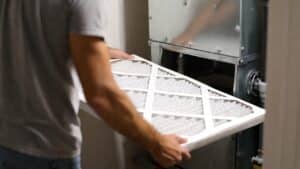
Dirty air filters
Low refrigerant
Dirty coils
Weak airflow
These problems may not be noticeable on mild days, but they show up fast when your system is pushed to its limits.
How Fast Should an AC Cool Your Home?
In most cases, your system will cool at about 1 degree per hour under normal conditions.
On very hot days, it may take longer—or stop dropping entirely once it reaches its limit.
If your air conditioner can’t keep up on hot days, but is still slowly cooling or maintaining a steady temperature, that’s often normal.
When It’s Probably NOT Normal
There are times when your system actually does need attention.
You may need air conditioner repair if:
The temperature keeps rising instead of holding steady
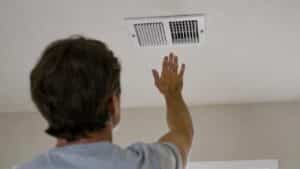
Air from vents doesn’t feel cool
Airflow is weak
The system turns on and off frequently
Ice forms on the unit
These signs point to a real performance issue—not just extreme weather.
Simple Ways to Help Your AC Keep Up
If your air conditioner can’t keep up on hot days, these small changes can make a big difference:
These steps reduce the load on your system and help it perform closer to its full capacity.
Avoid This Common Mistake
A lot of homeowners turn the thermostat way up during the day, then drop it down when they get home.
This creates a problem:
Your home heats up significantly
Your AC has to work much harder to catch up
It may run nonstop for hours
Keeping a more consistent temperature helps your system stay ahead of the heat instead of fighting it.
With drastic temperature changes, your air conditioner can’t keep up on hot days.
When It’s Time to Call for Help
If your air conditioner can’t keep up on hot days, the key question is how much cooling you’re actually getting. Most systems are designed to cool your home to about 20 degrees below the outdoor temperature.
If you’re not asking for more than that—for example, it’s 85 degrees outside and your home won’t get below 75—that’s a sign something may not be right. In that case, it’s worth having your system checked for a possible air conditioner repair.
A quick inspection can determine:
Whether your system is performing normally
If maintenance is needed
If your system is undersized
Whether repair or upgrade options make sense
If your system is older, it’s also a good time to think about the bigger picture. Putting money into repeated repairs may not make sense, and your budget could be better spent on an air conditioner replacement that performs better and keeps up more reliably during extreme heat. The goal isn’t to sell you something—it’s to help you understand what your system is capable of and what to expect.
The Bottom Line
If your air conditioner can’t keep up on hot days, don’t panic.
In many cases, your system is working exactly as designed—it’s just extremely hot outside. But if you notice signs of poor performance or inconsistent cooling, it’s worth taking a closer look.
Knowing the difference can save you time, money, and a lot of frustration during the hottest days of the year.
If your system isn’t cooling properly, Aaron Services provides air conditioning repair throughout North Metro Atlanta, including Lawrenceville, Suwanee, Buford, Cumming, and surrounding areas. Whether your air conditioner is blowing warm air, struggling to keep up during extreme heat, freezing up, or running constantly, our team helps homeowners understand what’s actually causing the problem and whether a repair, maintenance service, or system replacement makes the most sense.
Trustindex verifies that the original source of the review is Google.
We had a water line break- so pretty urgent! Aaron plumbing sent Cameron out right away to help. He was friendly, knowledgable, and so helpful. I had my water restored in 48 hrs and for a better price than I expected. A+ experience
Posted on Google
Sherry sherry@valentinesdiabetic.com
5 October 2026
Trustindex verifies that the original source of the review is Google.
First time to use Aaron Services. Gabriel was very thorough and approached solving the problem like an engineer. Diagnosed the issue and resolved the situation quickly. I now have a plumber that I know I can trust and will use them in the future!
Posted on Google
Mark Wolinsky
4 October 2026
Trustindex verifies that the original source of the review is Google.
I’ve used this company since moving to the area in 2001, and they have consistently been outstanding in every aspect of service. They accurately assess the issue, clearly explain the recommended solution, and provide fair, transparent pricing.
Most recently, Tai and Jeremy completed an all-day installation of a tankless water heater job for me. They went out of their way to customize the installation design to my specifications and were extremely accommodating and knowledgeable throughout the process. Everything was carefully designed and completed neatly and to code.
Their customer service is exceptional—timely, professional, and transparent. I highly recommend them for quality work, fair pricing, and a level of service that is increasingly hard to find.
Posted on Google
D Bog
4 October 2026
Trustindex verifies that the original source of the review is Google.
Tai replaced a cracked toilet flange and reinstalled toilet after floor was repaired. quality and speed of work was great.
Posted on Google
Lauri Beamish
2 October 2026
Trustindex verifies that the original source of the review is Google.
Great experience with Chris G. He was knowledgeable, professional and responsive with all communication. I would definitely recommend.
Posted on Google
kiran johnson
1 October 2026
Trustindex verifies that the original source of the review is Google.
I called Aaron to fix my water pressure regulator, and scheduling was quick and easy. Chris did an excellent job. He answered all of my questions and made me feel completely comfortable with the work. Great service from both Chris and Aaron!
Posted on Google
Steve Taylor
1 October 2026
Trustindex verifies that the original source of the review is Google.
Great HVAC repair service from Aaron Services. From the initial and follow-up calls with Brenda and Missy in the office, scheduling was easy and everyone was friendly and professional. John Pool was on time, professional, and communicated throughout the entire appointment. He explained the issue and repair clearly and made the whole process easy and stress-free. I really appreciate both the office staff and his professionalism. Based on my experience, I wouldn’t hesitate to call Aaron Services again for any future Heating, Cooling, and Plumbing needs.
09/29/2026 - Aaron Services has done it again! Luke arrived right on time and did an incredible job explaining what was needed to bring our under-sink drainage up to Gwinnett County building code—correcting a faulty installation left behind by a previous plumber. His communication was top-notch, and the pricing was completely fair. To top it off, Missy called afterward to make sure we were 100% satisfied with the work. Aaron Services is my go-to for all plumbing and HVAC needs, and I wouldn’t trust anyone else with my home!
Posted on Google
Paul Barzler
28 September 2026
Trustindex verifies that the original source of the review is Google.
Great service! Prompt, explained everything, and very professional. CJ was my tech and took time to show me a few things about my plumbing and water system that I did not know. I'm a "CC" member now!
Posted on Google
Marjorie Alexandre
25 September 2026
Trustindex verifies that the original source of the review is Google.
Very very professional.
Posted on Google
Jonathan Schreier
25 September 2026
Trustindex verifies that the original source of the review is Google.
Brandon T. and Tai were awesome. I called at 8am with a water leak and they were here at 9:45 and took care of it. Really personable! I will always call Aaron Plumbing first when a need arises.
Load more
Explore More: Essential Heating and Cooling Tips and Guides





 Google
  Facebook
  Trustindex