Atlanta’s municipal water systems often deliver water at pressures well above what residential plumbing systems are designed to handle. In many neighborhoods, pressure at the meter regularly exceeds safe code limits due to system design, elevation changes, and water tower placement.
When incoming water pressure is this high, plumbing code requires a pressure reducing valve (PRV) to protect pipes, fixtures, and appliances. This guide focuses on how Atlanta-area water pressure affects homes in practice, what PRV installation typically involves locally, and why replacement or installation isn’t a good DIY project.
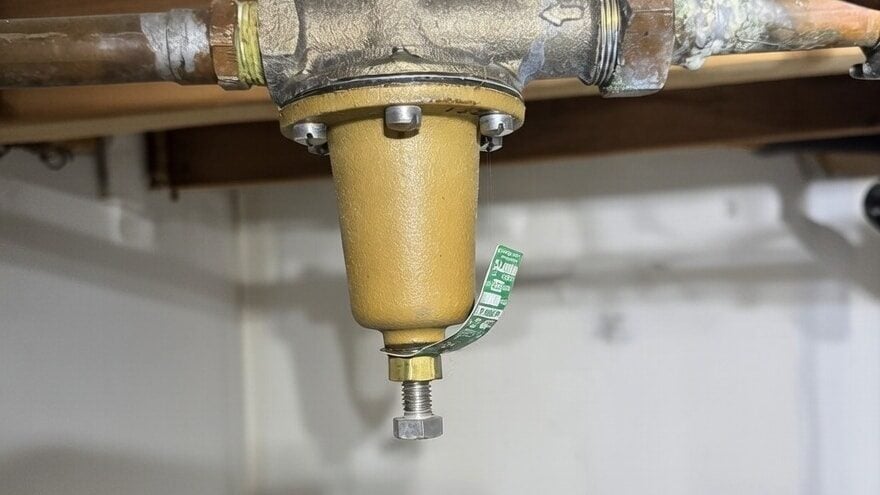
If you’re trying to locate the pressure regulating valve in your home, look for a brass bell shaped device like this
If you’re an Atlanta homeowner, you might be wondering if a PRV valve is necessary for your plumbing system. With the city’s high municipal water pressure, a PRV can be crucial for protecting your home.
This article will explore what a PRV is, why it’s important in Atlanta, and how to choose the right one for your home.
What Exactly Is a PRV Valve?
A pressure reducing valve (PRV) is installed on the main water line to lower incoming municipal water pressure to a safe level before it enters a home’s plumbing system. When water pressure exceeds code limits, a PRV is required to protect pipes, fixtures, and appliances from damage caused by excessive force inside the system.
PRVs automatically regulate pressure as water demand changes throughout the day, keeping pressure consistent at fixtures and appliances. Without proper regulation, high pressure can shorten the lifespan of pipes, wear out seals inside faucets and toilets, and place added stress on appliances like water heaters, dishwashers, and washing machines.
For a detailed explanation of how a PRV works, what it looks like, and where it’s typically located in a home, see our water pressure regulator guide.
Why Atlanta Homes Need PRVs
In Atlanta, the need for a PRV valve is critical due to the high water pressure from city or county systems. Homes connected to municipal supplies often experience pressure levels exceeding 80 PSI. This is a direct result of Atlanta’s unique terrain and infrastructure, which includes elevated water towers. High pressure can wreak havoc on household fixtures, causing leaks and bursts in faucets, toilets, and appliances like dishwashers and washing machines. Such damage not only leads to costly repairs but can also void manufacturer warranties, leaving homeowners with unexpected expenses.
The hot, humid climate of Atlanta exacerbates these issues. During the sweltering summer months, thermal expansion within plumbing systems becomes a significant concern. The combination of high municipal water pressure and thermal expansion can cause joints to leak and pipes to burst. For homeowners, this means not only dealing with potential water damage but also the inconvenience of frequent plumbing repairs. A PRV valve helps mitigate these risks by maintaining a safe, consistent water pressure within your home.
Looking ahead to 2025-2026, pressure levels at the meter in areas like DeKalb, Fulton, and Cobb counties are projected to average between 85 and 120 PSI. Local plumbers have reported these figures, highlighting the urgent need for PRVs in Atlanta homes. Without a PRV, the excessive pressure from these municipal systems can accelerate wear and tear on your plumbing infrastructure. This leads to premature failures and the need for more frequent replacements of critical components.
Installing a PRV is a proactive step to protect your home’s plumbing system. By regulating the incoming water pressure, you can extend the lifespan of your fixtures and appliances. This not only saves money on repairs and replacements but also ensures your home remains comfortable and functional. For Atlanta homeowners, a PRV valve is not just an option; it’s a necessary investment in maintaining the integrity of your home’s plumbing system.
Choosing the Right PRV for Your Atlanta Home
Selecting the right PRV for your Atlanta home involves understanding the types available and their specific benefits. The adjustable spring-diaphragm models, like the popular Watts 3/4-inch LF25A2B, are the most common choice. These allow you to fine-tune the pressure between 25-75 PSI using a simple screw adjustment, making them versatile for varying household needs. If you prefer a set-and-forget option, fixed-set cartridge versions offer simplicity with their preset range of 50-65 PSI, eliminating the need for adjustments.
For those dealing with Atlanta’s sediment-heavy water, integral bypass or strainer models could be advantageous. These come with built-in filters that help prevent sediment from clogging your plumbing system. Unlike cartridge models, spring-diaphragm PRVs also offer the benefit of easier maintenance. Rebuild kits are available for $20-50, allowing you to extend the valve’s life without a complete replacement. This can be a cost-effective solution for maintaining consistent water pressure in your home.
In larger homes, the risk of a total water shutdown during PRV failure can be mitigated by choosing a bypass model. These models are designed to keep water flowing even if the valve malfunctions, ensuring that your household remains functional. For homes with a demand of 15-20 GPM, the Watts N36 or Cash Acme 373 models excel, as they can handle Atlanta’s occasional pressure surges up to 150 PSI. This capability makes them a reliable choice for maintaining steady water pressure despite external fluctuations.
What You’ll Actually Pay for a PRV in Atlanta
PRV costs vary nationwide, but Atlanta-area homes often involve additional considerations due to pipe materials, access limitations, and higher-than-average municipal water pressure. In general, the cost of living in Atlanta and the suburbs around it is higher than other areas in the country, which will affect your price.
In Atlanta, purchasing a PRV valve isn’t just a consideration of price. It’s important to understand the proper size of your connecting pipes and the appropriate model to install. Prices range dramatically depending on the model that your plumbing system requires, and they change all the time. We do not recommend choosing your own PRV valve. Instead, a plumber will be most up to date on which models are performing best in the field and what will work best for your plumbing system. A professional plumber will have most standard, high performing PRVs on their truck from reputable brands like Watts and Wilkins.
Installation costs for a PRV in Atlanta add significantly to the overall expense. A plumber’s visit to supply and install a PRV runs between $475-800, depending on the job’s complexity. Factors like copper soldering, impeded access, and shutoff valve upgrades can increase the price. Replacement of a pressure regulating valve alone, with out other problems like an active leak, is not an emergency job. If your plumber quotes you emergency fees, you may want to wait until standard business hours.
Attempting to save money by installing or replacing a pressure regulating valve yourself isn’t a great DIY project, even for confident homeowners. A PRV controls unregulated incoming water pressure, and that pressure can be extremely high. While a leak on properly regulated water pressure can cause damage, a leak on unregulated pressure can be devastating—flooding a home in minutes and damaging walls, flooring, and personal belongings before you even realize what’s happening. PRV replacement sometimes requires soldering, which adds another layer of risk if it’s not done perfectly, and using the correct, current model is critical for proper fit and performance. A mismatched or improperly installed valve can fail prematurely or never regulate pressure correctly. In the end, saving a couple hundred dollars isn’t worth the risk of major water damage, failed inspections, or costly repairs that far outweigh the cost of having it done right the first time.
Keeping Your PRV in Top Shape
Regular maintenance of your PRV valve is crucial to ensure it functions effectively in Atlanta’s unique conditions. Start by inspecting the valve every 1-2 years. Check if the pressure gauge drifts above 70 PSI, which could indicate a problem. Flushing strainers quarterly is essential, especially with the sediment-heavy water in Atlanta. This simple task takes just 5-10 minutes using a bucket and wrench. Rebuilding the diaphragm every five years is advisable. A rebuild kit costs around $50 and takes 30-60 minutes to complete.
While DIY checks are suitable for basic maintenance, such as turning off the main water supply, relieving pressure, and inspecting for leaks, more complex tasks should be left to professionals. Full rebuilds or adjustments can lead to improper calibration if not handled correctly. Having a pro conduct a whole-house inspection annually, which includes PRV valve servicing, costs between $100-200. This ensures that your system remains correctly calibrated and efficient.
Atlanta’s humid climate accelerates corrosion on brass components, making it necessary to test the pressure biannually. This helps catch any potential issues early. Replace your PRV valve every 10 years to prevent failures during peak water usage times. Regular testing and timely replacement are key to avoiding costly damage and ensuring your plumbing system remains in top shape.
When to Call in the Pros
If you’re dealing with a PRV valve issue in Atlanta, calling a licensed plumber is essential. Georgia’s International Plumbing Code mandates a licensed professional for initial installations, ensuring code compliance, especially when connecting to municipal lines. PRV valves should be replaced every 10 years or sooner if a pressure test indicates levels exceeding 80 PSI. Hiring a professional not only meets legal requirements but also guarantees safety and efficiency in your plumbing system.
Expect a professional service visit for PRV valve issues to last between one to two hours. The process includes a pressure test, which typically costs around $75, followed by shutting off the main water supply, cutting and soldering the new valve, and calibrating it to the recommended 60 PSI. The entire service, including a final gauge check, can range from $400 to $700. This investment ensures that your system operates smoothly and avoids potential water damage.
Choosing a reliable Atlanta contractor involves verifying their Georgia plumbing license through sos.ga.gov and checking their Google ratings for scores of 4.8 or higher. Contractors like TE Certified or My Georgia Plumber are good options. Request quotes for whole-house inspections, which usually cost between $150 to $250, and confirm they offer warranties of one to two years. Avoid any contractor who insists on cash-only payments or lacks proper licensing, as this could leave you liable for damages exceeding $5,000.
When dealing with PRV valve issues, professional help is crucial to avoid improper calibration and potential system failures. While some homeowners might handle basic checks, full rebuilds and adjustments should be left to experts. Regular pressure testing, especially in humid Atlanta, helps prevent corrosion-related failures. Relying on professionals ensures your PRV valve functions correctly, safeguarding your home from costly water damage.
While PRV requirements are based on water pressure rather than location, Atlanta provides a clear real-world example of how high municipal pressure affects homes over time.
Frequently Asked Questions
How can I tell if my home needs a PRV?
If you experience frequent leaks, bursts, or rapid wear on plumbing fixtures, your home likely needs a PRV. If your water pressure exceeds 80 PSI as measured by a gauge, it’s a strong indication that a PRV is necessary.
What are the signs that my PRV is malfunctioning?
Signs of a malfunctioning PRV include inconsistent water pressure, strange noises coming from the valve, or water hammer effects in the pipes. If you notice any of these issues, it’s advisable to have the valve inspected or replaced.
Can I install a PRV myself, or should I hire a professional?
While some homeowners with plumbing experience may install a PRV themselves, it’s generally recommended to hire a professional plumber to ensure proper installation and avoid potential issues. A professional can also help with selecting the right type of PRV for your home’s specific needs.